
Overview
Thermoelectric Effects is a short, conceptual chapter, and NEB tests it accordingly — expect 1–2 MCQs plus a theory question most years, but only an occasional numerical. The chapter centers on three named effects that students frequently blur together: the Seebeck effect (producing emf from a temperature difference between two junctions of dissimilar metals), the Peltier effect (the reverse — passing current causes one junction to heat and the other to cool), and Thomson’s effect (a smaller variation within a single conductor due to a temperature gradient). Nearly every short-answer question in the past papers below asks you to differentiate between Seebeck and Peltier, which tells you exactly where to focus.
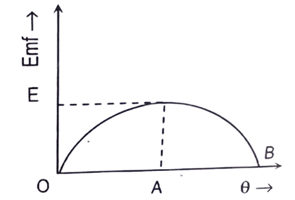
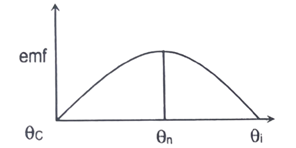
The other recurring theme is the thermo-emf vs. temperature graph — how emf varies as the hot junction temperature rises while the cold junction stays at 0°C, and the two special points on that curve: neutral temperature (where emf peaks) and temperature of inversion (where emf returns to zero and reverses direction). The numericals, when they appear, are simple relationships between these two temperatures and the cold junction temperature, so knowing the formula linking them is enough to handle most variations.
Below is the full set of MCQs, theory questions, and numerical problems from past NEB board exams, organized by course and question type.
⚠️ Common Mistakes Students Make
- Mixing up Seebeck and Peltier effects. Seebeck produces emf from a temperature difference; Peltier produces a temperature difference from a current. They’re reverse processes of each other — memorize which direction each one runs.
- Confusing neutral temperature with temperature of inversion. Neutral temperature is where thermo-emf is maximum; inversion temperature is where thermo-emf returns to zero. The relation tn = (ti + tc) / 2 connects them, but students often plug values into the wrong side.
MCQs
Which of the following represents the process of production of emf by maintaining a difference of temperature between the two junctions of a loop of two dissimilar metals?
Show answer
What is the shape of a graph between temperature and thermoemf produced in a thermocouple?
Show answer
When a current is passed across junctions of two dissimilar metals, one junction is heated and other is cooled. This effect is called
Show answer
The production of emf by maintaining a difference of temperature between the two junctions of dissimilar metals is called
Show answer
The temperature of inversion of a thermocouple is 600oC and the natural temperature is 310oC. What must be the temperature of cold junction
Show answer
Study the following list of thermoelectric series and answer the question below.
Sb, Fe, Zn, Pb, Mn, Cu, Bi
Which of the following combination would give the least emf?
Show answer
Which of the following is the phenomenon of production of emf by maintaining a difference of temperature between two junctions of dissimilar metals?
Show answer
If the emf of a thermocouple, one junction of which is kept at 0oC is given by [latex]E = a\theta + \frac{1}{2}b\theta^2[/latex]. Then, the neutral temperature will be
Answers
Show answer
Theoretical questions
Explain the variation of thermoelectric emf with the temperature of the hot junction of a thermocouple. [3]
The figure below shows the variation of thermo emf with the temperatures of hot junction.
i. What are the temperature corresponding to the points A and B called? [1]
ii. If [latex]\theta_c = 0^oC[/latex] and temperature at B is 500oC. What is the temperature at A? [1] Ans: 250oC
iii. Define inversion temperature. [1]
What is thermoelectric effect? Discuss the variation of thermo-emf with the temperature of hot junction of a thermo-couple. [3]
The figure shows the variation of thermoemf with the temperature of the hot junction, when the cold junction is at 0oC.
i. What is thermoelectric effect? [1]
ii. Define [latex]\theta_n[/latex] and [latex]\theta_i[/latex]. [2]
iii. What will be the effect on [latex]\theta_i[/latex] if we shift the cold junction to [latex]-10^oC[/latex]? [1]
iv. Give one of the applications of such thermocouple. [1]
Differentiate between Seebeck Effect and Peltier Effect.
What is the cause of Seebeck effect?
What is thermoelectric effect?
If the temperature of cold junction of a thermocouple is lowered, what will be the effect on neutral temperature and the temperature of inversion?
Does the thermoelectric effect obey the law of conservation of energy? Justify.
Why is Lead (Pb) used as a standard reference metal in thermo-electricity?
What is temperature of inversion? On what factors does it depend?
What is temperature of inversion? How does it change, if temperature of cold junction decreases?
Point out the difference between Peltier and Seebeck effect in brief.
OR What is Seebeck effect? How is this effect different from Peltier effect? Explain.
On what factors does the temperature of inversion depend?
Is Seebeck effect reversible effect? Explain.
LONG ANSWER QUESTIONS
Define thermoelectric effect. Discuss the variation of thermo emf generated in a thermocouple as a function of the temperature of the hot junction, keeping the cold junction at 0oC.
Define thermoelectric effect. How does the emf of a thermocouple vary with the temperature of hot junction?
What is Seebeck effect? How does the thermo emf vary with the increase in temperature of hot junction, keeping cold junction at 0oC? Explain.
What is thermoelectric effect? How does the thermo emf of a thermocouple vary with increase in temperature of hot junction, keeping cold junction at 0oC? Explain.
OR What is Seebeck effect? Explain the variation of thermo emf with gradual increase in the temperature of hot junction, keeping the cold junction at 0oC.
Numerical problems
The temperature of two junctions of a thermocouple are maintained at 0oC and [latex]\theta^o[/latex] C. The thermo-emf generated is given by the relation, [latex]E = 10^{-5}\theta – 10^{-7}\theta^2[/latex]. Calculate the neutral temperature of the thermocouple and maximum value of thermoemf. Ans: 50oC, [latex]2.5\times 10^{-4}\ V[/latex]
In a given thermo-couple the temperature of cold junction is 25oC while the neutral temperature is 270oC. What is the value of temperature of inversion? [2] Ans: 515oC
The thermo – emf E and the temperature of hot junction [latex]\theta[/latex] satisfy a relation E = a[latex]\theta + b\theta^2[/latex] where a = 4.1 x 10⁻⁵ V(oC)-1 and b = – 4.1 x 10⁻⁸ V(oC)-2. If the cold junction temperature is 0oC, find the neutral temperature. Ans: 500oC