
Introduction
Electromagnetic induction is defined as the production of an electromotive force (i.e., voltage) across an electrical conductor due to its dynamic interaction with a magnetic field.
Faraday’s Experiment
Faraday’s observations are as follows:
- When a magnet is moved inwards or away from the coil, the galvanometer shows sudden deflection.
- Since, there is relative motion between the coil and the magnet, the deflection lasts for long.
- The deflection becomes faster and slower if the magnet moves faster and slower into the coil.
- The direction of deflection in the galvanometer is reversed when polarity of the magnet is reversed.
The deflection in the galvanometer is due to a current developed in the circuit. This current is called induced current and the emf developed in the coil is called induced e.m.f.
Magnetic flux
Magnetic flux through any area is defined as the number of magnetic lines of force passing normally through the surface.
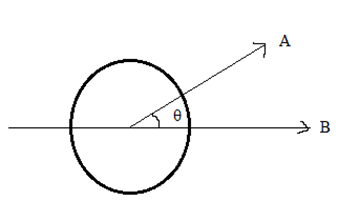
If [latex]\phi[/latex] be the magnetic flux passing through the surface area ‘A’ placed in uniform magnetic field of flux density B forming an angle with normal, then,
[latex]\phi = \vec{B}{A} = BAcos\theta[/latex]
If the coil of the area A consists of a large no. of turns N, then, it is called flux linkage and it is given by:
[latex]\phi = NAB cos\theta[/latex]
Its SI unit is Weber (Wb) and CGS unit is Maxwell.
You've reached the end of the free preview. Continue with NN Premium.
- Complete access to every Premium chapter
- Notes, QBank, solutions & MCQs
- Premium PDFs & study resources
- Entrance preparation & mock tests
One NN Premium subscription unlocks everything.